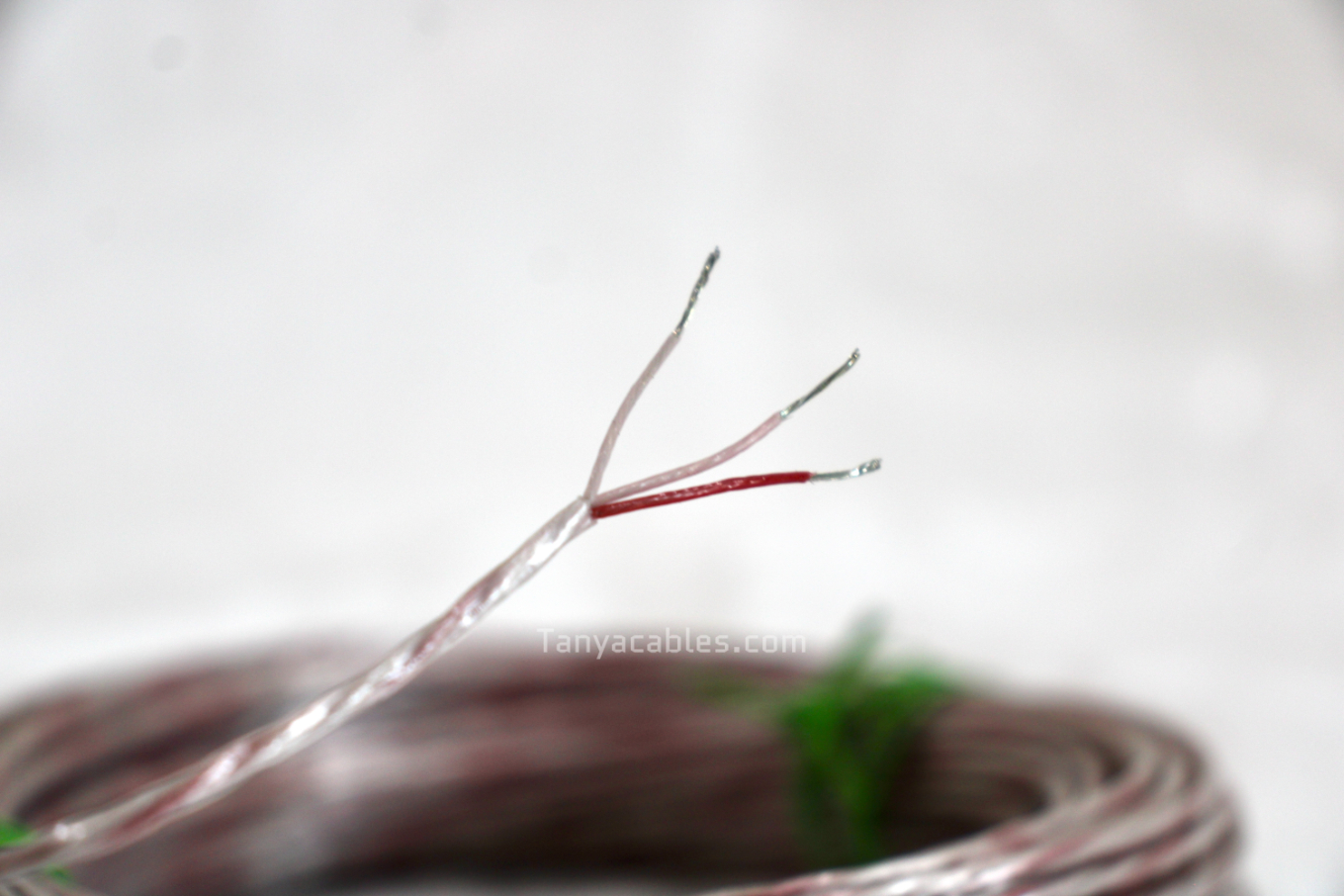
What are PFA RTD cables?
An RTD (resistance temperature detector) sensor, such as a Pt100, reports temperature through a very small change in its resistance. A PFA RTD cable brings that change back to your controller, transmitter or data logger. Because the signal is so small, the insulation around the conductors must stay stable and clean. PFA does this even when the sensor sits in hot, cold or chemically aggressive surroundings. Industrial RTD sensors generally follow the IEC 60751 standard.
PFA or FEP: which one should you pick?
Both are fluoropolymers and both suit RTD cables. The main difference is heat. PFA can work at higher temperatures than FEP, and it is also the usual choice when the cable must cope with very low temperatures or ultra-clean surroundings. FEP suits milder jobs and usually costs a little less. If you are not sure, tell us the highest and lowest temperature your cable will see and we will point you to the right one.
Key Benefits of PFA Insulated RTD Cables
- Works across a very wide temperature span, from deep cold to high process heat
- Stays thermally steady even when exposed to extreme temperatures for long periods
- Stands up to acids, solvents and other aggressive process media
- Low dielectric loss helps the RTD signal arrive accurate and steady
- Good insulation that helps limit noise and drift in electrical measurements
- Built for long service, because the insulation does not break down easily
- Smooth surface that does not hold dirt, which suits clean and controlled areas
Why choose Tanya Enterprises for PFA RTD cables?
Two things guide how we build these cables: quality and know-how. Every PFA RTD cable is made to a clear specification and tested before it is dispatched. Our technical team sits down with you to understand the sensor, the distance, the surroundings and the instrument, and then shapes the cable around that. We keep our dealings open and honest, we answer queries quickly, and we plan each order so your production line is not left waiting.
Orders from outside India
Buyers abroad can order from us too. We wind PFA RTD cable on reels or rolls that suit sea and air freight, and test reports are available if you need them for your records. Write to us with your destination, cable length and quantity, and we will explain the next steps.
Where PFA Insulated RTD Cables Are Used
PFA insulated RTD cables are commonly used in:
- Chemical and petrochemical processing
- Pharmaceutical and biotechnology production
- Semiconductor and electronics manufacturing
- Cryogenic equipment used for lab testing and research
- High-temperature reactors and heat treatment systems
- Laboratory and analytical instruments
How to choose the right PFA RTD cable
- Note both the lowest and the highest temperature the cable will see, not just the working point
- List what the cable may touch: acids, solvents, steam or cleaning agents
- Tell us if the area is a clean room or a pharma zone, because the surface finish may matter
- Match the conductor size to your sensor, the cable length and the instrument
- Decide if the cable stays fixed or keeps moving, and check the bending radius below
- Pick the colour coding and packing (rolls or reels) that suit your line
Certificates
Technical specifications
HAR
HAR certificate No. CA01.00764
Rated voltage
450/750 VAC
Oil resistance
EN 50363-2-1
Short-circuit temperature
200°C
Rated temperature
-50 ÷ 90°C (@ fixed installation), -30 ÷ 90°C ( in dynamic installations )
Minimum bending radius
8D free movement, 6D @ fixed installation
Technical sheet
download
Available types of packaging
Frequently Asked Questions
What are PFA RTD cables?
PFA RTD cables are cables insulated with PFA (perfluoroalkoxy alkane), a fluoropolymer, that carry the small signal of an RTD temperature sensor to a controller or logger. The PFA insulation keeps the signal stable in very hot, very cold or chemically harsh surroundings.
Should I choose PFA or FEP for an RTD cable?
Choose PFA when the cable will face higher temperatures than FEP is comfortable with, very low temperatures, or ultra-clean surroundings. FEP is a good fit for milder jobs and usually costs a little less. Tell us the highest and lowest temperature your cable will see and our team will suggest the right one.
What temperature range can PFA RTD cables handle?
PFA as a material works from about -200°C to +260°C, so it covers both cryogenic work and hot process lines. The exact rating of a finished cable depends on its construction. Our technical specifications above list -50°C to 90°C in fixed installations and -30°C to 90°C where the cable moves, with a short-circuit temperature of 200°C, so please check the datasheet or ask us before final selection.
Are PFA RTD cables suitable for chemical plants and clean areas?
Yes. PFA resists acids, solvents and many aggressive process media, and its smooth surface does not hold dirt easily. That is why it is used in chemical, pharmaceutical and semiconductor settings where cleanliness matters.
Where are PFA RTD cables commonly used?
They are used in chemical and petrochemical processing, pharmaceutical and biotech production, semiconductor manufacturing, cryogenic test equipment, high-temperature reactors, heat treatment systems, and laboratory and analytical instruments.
Who is a reliable PFA RTD cables manufacturer in India?
Tanya Enterprises in Meerut, Uttar Pradesh manufactures PFA RTD cables. Each cable is tested before dispatch, and our technical team works with you to match the cable to your sensor, distance and surroundings.
Can I buy PFA RTD cables from you if I am outside India?
Yes. We export PFA RTD cables and also supply buyers across India. The cable is wound on reels or rolls for sea or air freight, and test reports can be provided on request. Send your destination, length and quantity to start.
Do you make PFA RTD cables to custom sizes?
Yes. Conductor size, insulation thickness, cable length and colour coding can be set to suit your project. Share your drawing or requirement and our team will confirm what is possible.
Which approvals do your PFA RTD cables carry?
They carry RoHS, REACH, HAR, CE, AD8 and Halogen-Free approvals, which cover Indian and international safety and quality expectations.
How do I get a quote for PFA RTD cables?
The quickest way is the enquiry form on this page. You can also write to info@fepwires.com or call +91 9045024844 and tell us the conductor size, cable length and quantity you need.