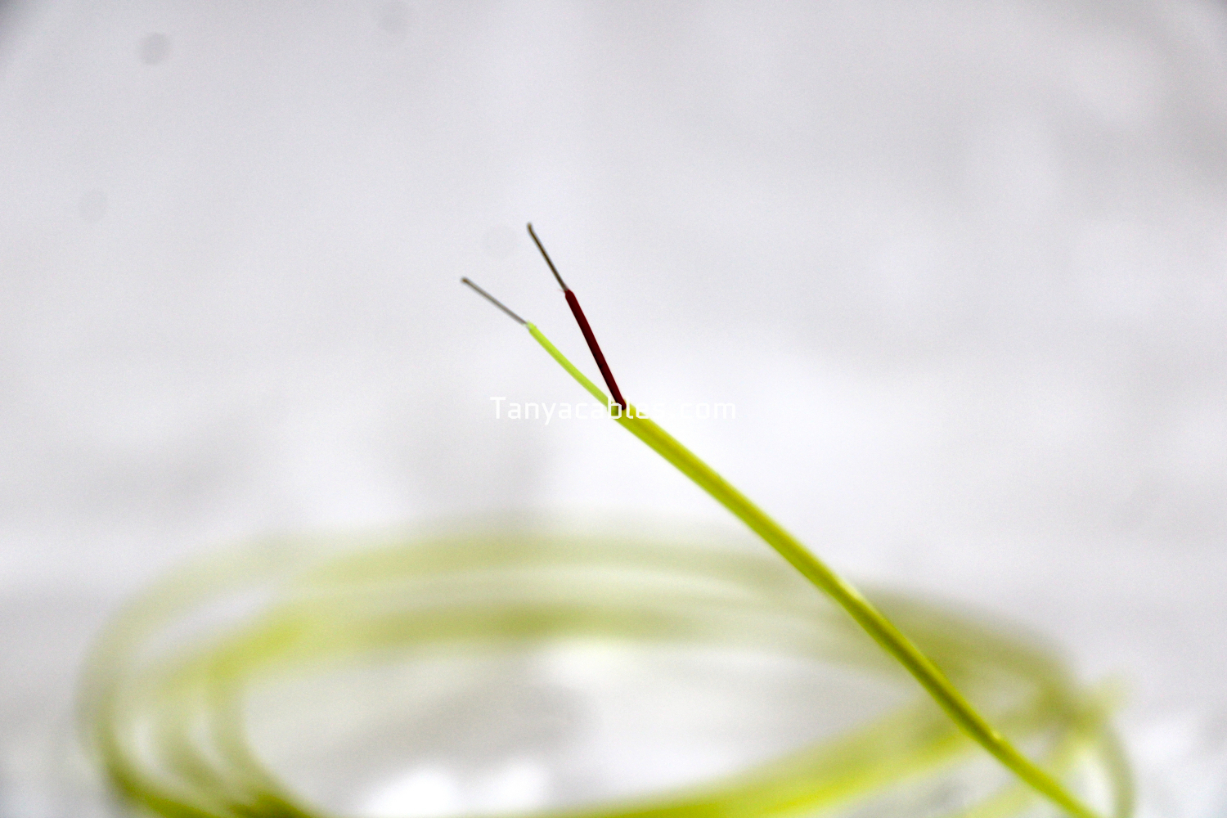
What is a thermocouple extension cable?
A thermocouple measures temperature at the point where two different metals meet. Often that point sits deep inside a furnace or pipe, while your instrument sits far away in a panel. The extension cable bridges that distance. Its two conductors must match the thermocouple type, and the positive and negative sides must be connected the right way round. The colour codes for these cables are set by standards such as IEC 60584-3. If the wrong wire type is used, or the polarity is reversed, the instrument will show a wrong temperature, even though nothing looks broken.
Why we insulate with FEP
Everyday insulation such as PVC gets tired after repeated heating and cooling. It can harden, crack or let moisture in, and then the signal starts to wander. FEP is different. It does not react with most chemicals, it shrugs off oils and water, and its electrical behaviour stays steady for years. That is the quiet reliability that precision temperature measurement needs.
What makes Tanya Enterprises a dependable FEP thermocouple extension cable manufacturer
We treat this cable as a measuring part, not just a piece of wire. Every batch is checked for conductor size, insulation thickness, high-voltage withstand and surface finish before it is packed. Our team also helps you with the practical questions: which cable suits your thermocouple type, how long the run can be, and what jacket build fits the area. You get a straight answer before you place the order, and support after the cable is installed.
Supply and export of FEP thermocouple extension cables
Overseas buyers can order from us as well. We wind the cable on reels or rolls so it travels safely, and we share test reports when you ask for them. Just tell us your destination, the length you need and the quantity, and we will explain how the shipment can be arranged.
Key Features & Benefits
- Works in continuous hot conditions and stands up to corrosion
- FEP insulation on each core keeps the electrical performance of the pair steady
- The FEP outer jacket guards the cable against chemicals, oils and moisture
- Low signal loss and little interference help the instrument read the true temperature
- Flexible enough to pull through conduits, trays and tight instrument panels
- Does not age quickly, so it needs less maintenance and replacement over the years
Where FEP thermocouple extension cables are used:
- Furnaces, ovens and kilns
- Reactors, boilers and heat exchangers
- Industrial heating and process control lines
- Power plants and energy facilities
- Instrument panels near heat, fumes or corrosive substances
- Laboratories and test rigs
Common mistakes to avoid when choosing and fitting the cable:
- Using a cable that does not match the thermocouple type
- Reversing the positive and negative conductors at the terminals
- Bending the cable tighter than the minimum bending radius shown below
- Running the cable beside heavy power lines without checking for electrical noise
- Ignoring the temperature the cable itself will face along its path
- Not sharing the full application details before ordering. Send them to us and we will check the cable choice with you
Certificates
Technical specifications
HAR
HAR certificate No. CA01.00764
Rated voltage
450/750 VAC
Oil resistance
EN 50363-2-1
Short-circuit temperature
200°C
Rated temperature
-50 ÷ 90°C (@ fixed installation), -30 ÷ 90°C ( in dynamic installations )
Minimum bending radius
8D free movement, 6D @ fixed installation
Technical sheet
download
Available types of packaging
Frequently Asked Questions
What is a FEP thermocouple extension cable?
It is a cable with two conductors, each insulated with FEP fluoropolymer and covered by an outer jacket. It carries the small voltage signal from a thermocouple to a controller or indicator without changing it, even in hot, corrosive or damp industrial areas.
What is the difference between extension cable and compensating cable?
Extension cable uses the same alloys as the thermocouple itself, while compensating cable uses different, lower-cost alloys that copy the thermocouple signal only over a limited temperature range. Whichever you use, it must match your thermocouple type. Tell us your thermocouple type and our team will advise the right construction.
Why is FEP used to insulate thermocouple extension cables?
FEP handles heat, resists chemicals and moisture, and keeps its electrical behaviour stable over time. This helps the temperature signal stay true, even when the cable is heated and cooled again and again.
What temperature range can these cables handle?
Our FEP thermocouple extension cables are rated for -50°C to 90°C in fixed installations and -30°C to 90°C where the cable moves, with short-circuit temperature up to 200°C. FEP as a material can work continuously up to about 200°C, but the final rating depends on the cable construction, so please check the technical specifications above or ask for the datasheet.
Who is a reliable FEP thermocouple extension cable manufacturer in India?
Tanya Enterprises, based in Meerut, Uttar Pradesh, manufactures FEP thermocouple extension cables. Each batch is tested before dispatch, the cables can be made to custom specifications, and they carry RoHS, REACH, HAR, CE, AD8 and Halogen-Free certifications.
Can you export FEP thermocouple extension cables to other countries?
Yes. We supply buyers in India and ship to overseas customers. The cable is wound on reels or rolls for safe transport, and test reports can be shared when you ask for them. Send us your destination, length and quantity to get a quote.
Where are FEP thermocouple extension cables used?
They are used wherever temperature has to be measured with confidence, such as furnaces, ovens, reactors, boilers, industrial heating systems, process control lines, power plants and instrument panels near heat or corrosive substances.
Does polarity matter when connecting a thermocouple extension cable?
Yes. The positive and negative conductors must be connected to the matching terminals. If they are reversed, the instrument shows a wrong reading. Always follow the colour code of your thermocouple type and check it before switching on.
Can I order these cables in custom specifications?
Yes. Tanya Enterprises can adjust conductor size, insulation thickness, cable length and colour coding to match your project. Share your requirement and our team will help you get it right.
How can I get a quote for FEP thermocouple extension cables?
Fill the enquiry form on this page, email info@fepwires.com or call +91 9045024844. Share your thermocouple type, conductor size, length and quantity, and our team will reply with a quote.
About the author
Written by the Tanya Enterprises Technical Team, Meerut, Uttar Pradesh. Our team handles FEP, PFA and ETFE insulated wires and cables for industrial, thermal and instrumentation work, and helps customers with material choice, sizing and testing. For heating applications, you can also read about our FEP insulated heating wires.