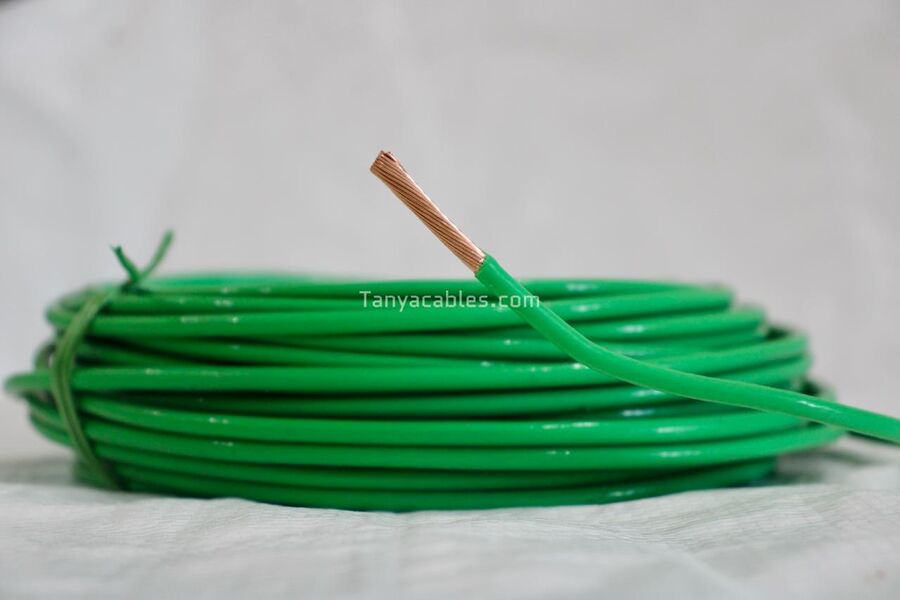
What are PFA insulated wires?
PFA stands for perfluoroalkoxy, a fluoropolymer closely related to PTFE and FEP. In a PFA wire, a bare or tinned copper conductor is covered with this insulation using a melt-extrusion process. Because the material flows like a standard thermoplastic, the wall stays smooth and even over long lengths, even on thin constructions. Our range of PFA insulated wires is built on exactly this process, and the same insulation is used in our PFA RTD cables for temperature sensing.
Key properties that make PFA wire stand out
- High continuous temperature rating: PFA is generally rated up to about 260°C, which makes it a reliable high temperature wire for ovens, heaters and process equipment.
- Chemical resistance: it stays stable against most acids, solvents, fuels and oils, so it works as a dependable chemical resistant wire in plants and laboratories.
- Stable electrical behaviour: low dielectric loss and high insulation resistance help signals stay clean, even when the temperature changes.
- Good flex life and stress-crack resistance: PFA handles repeated movement and heat better than FEP in many layouts.
- Flame resistance and low moisture absorption: it does not soak up water, and it resists burning.
PFA vs FEP wire: which one should you pick?
This is the question we hear most often. Both are melt-processible, smooth to strip and easy to colour code. The main difference is temperature. FEP is typically used up to around 200°C, while PFA keeps going to roughly 260°C and holds its shape and strength better near the top of that range. FEP is usually the more economical choice, so if your wire never sees more than moderate heat, our guide to FEP wires is a good place to start. If the application runs hotter, or the cable flexes in a hot zone, PFA is the safer pick. For a wider three-way comparison, read our breakdown of FEP vs PFA vs PTFE wire insulation.
PFA vs PTFE and ETFE
PTFE reaches similar peak temperatures but is paste-extruded, which can make very long, thin-wall runs harder to produce, and our extruded Teflon wires cover that end of the range. ETFE sits at the other side: it is tougher and lighter, with a lower heat ceiling, so our ETFE insulated wires suit jobs where abrasion resistance matters more than temperature. PFA sits in the middle, offering high heat, smooth insulation and good flexibility together.
Where PFA insulated wires are commonly used
- Industrial heating elements and lead wires, including fluoropolymer heating wires near hot surfaces
- Temperature sensors and RTD assemblies in process plants
- Semiconductor and chemical processing equipment
- Laboratory and analytical instruments
- Aerospace and defence wiring that needs UL or MIL compliance
- Automotive and EV harnesses near engines, batteries and exhaust components
A practical example
Imagine a sensor lead running from a heated packaging machine to a control panel. The wire passes within a few centimetres of a hot platen, is wiped down with cleaning solvents, and is flexed every time the machine is serviced. PVC would harden and crack. A PFA insulated wire is built for this combination of heat, chemicals and movement, which is why it is a common choice in such layouts.
What to check before ordering
- Maximum operating temperature, including the hot spots, not only the average
- Conductor type and size: bare copper, tinned copper or silver-plated, and the AWG you need
- Insulation thickness and voltage rating for your circuit
- Approvals: UL, MIL, RoHS and REACH as required by your customer
- Colour coding and length for your harness drawing
Why choose Tanya Enterprises PFA wires
Tanya Enterprises supplies fluoropolymer wires to OEM and wire harness manufacturers from an LCSO-approved, CE and ISO certified facility. Our wires are UL and MIL standard compliant, and every batch is certified under RoHS, REACH, HAR, CE, AD8 and Halogen-Free standards. We can customise conductor size, insulation thickness, length and colour to your drawing, so you do not have to compromise on a catalogue size.
Sources and further reading
- Chemours, Teflon PFA fluoropolymer resin technical information - teflon.com
- ASTM D3307, standard specification for PFA resin - astm.org
- UL wire and cable certification guidance - ul.com
Temperature ratings in this article are typical material values. Always confirm the exact rating of a finished wire against its datasheet and approval standard.
About the author
Written by the Tanya Enterprises technical team, based in Meerut, Uttar Pradesh, with over 25 years of experience supplying FEP, PFA, PTFE and ETFE insulated wires to OEM harness manufacturers. Last updated: 13 October 2026.
Frequently Asked Questions
What are PFA insulated wires?
PFA insulated wires are copper or tinned copper conductors coated with perfluoroalkoxy, a melt-processible fluoropolymer. The insulation is known for continuous operation at high temperatures, strong chemical resistance and stable electrical performance.
What is the maximum temperature for PFA wire?
PFA insulation is generally rated for continuous service up to about 260°C, which is higher than FEP at about 200°C. The final rating of any wire also depends on its conductor plating, construction and the approval standard it is built to.
What is the difference between PFA and FEP wire?
Both are melt-processible fluoropolymers, but PFA tolerates higher continuous temperatures and holds up better against flex and stress cracking. FEP costs less and is a good fit where temperatures stay below roughly 200°C.
Is PFA wire better than PTFE wire?
Neither is better in every case. PFA is melt-extruded, so it gives smooth, consistent insulation in long lengths and thin walls, while PTFE is paste-extruded and suits the most extreme conditions. The choice depends on temperature, flexibility and budget.
Where are PFA insulated wires used?
They are used in industrial heating, temperature sensing, semiconductor and chemical plants, laboratory instruments, aerospace and defence wiring, and automotive and EV harnesses where heat and chemical exposure are high.