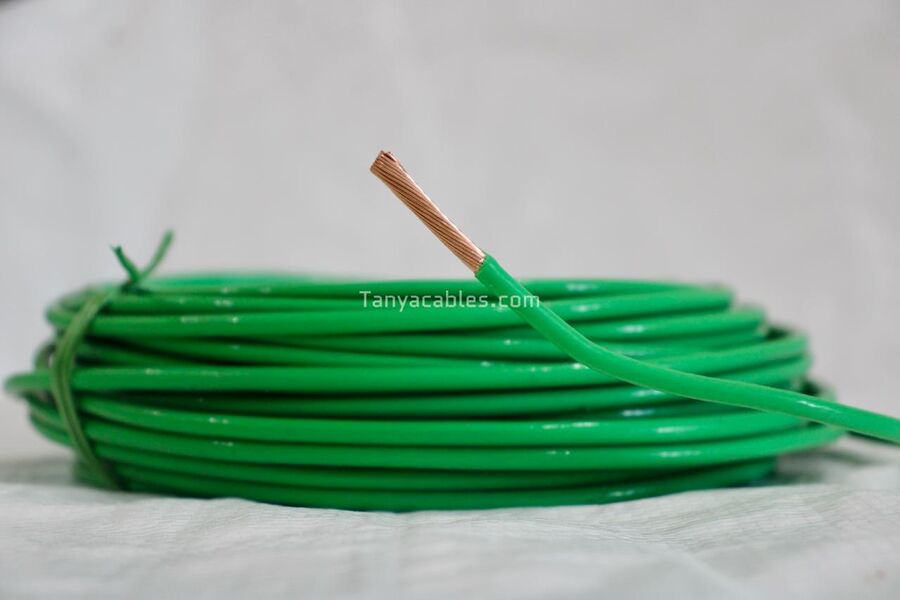
Start with where the wire will actually run
Before comparing any numbers, picture the wire's working life. Will it sit inside a sealed control panel, or run near a heated barrel on a production line? Will it be exposed to oil, cleaning solvents or constant moisture? Will it flex thousands of times, or be routed once and left alone? FEP wires are popular because the insulation copes well with heat, chemicals and moisture, but the right construction still depends on the answers to these questions. Write them down first. They make every later decision easier.
Read the temperature rating on the datasheet
FEP is a melt-processible fluoropolymer from the same family as PTFE, and it is known for staying stable in heat. But a wire's rating depends on its full construction, not just the insulation material, and fixed installations are often rated differently from flexing ones. Always check the rated range and the short-circuit limit for the exact product you plan to buy, and leave a sensible safety margin above the temperature your application really reaches. If your environment runs hotter than FEP is comfortable with, look at PFA insulated wires, which are generally chosen for higher temperature demands.
Pick the right conductor
The conductor is usually copper, and there are two decisions to make. The first is bare or tinned. Tinned copper is a common choice when moisture is a concern or when the wire will be soldered, since the tin coating helps protect against oxidation. Bare copper suits dry, controlled environments. The second decision is solid or stranded. Solid conductors are fine for fixed runs, while stranded conductors bend more easily and cope better with vibration and repeated movement. For anything that moves, such as robotic arms or door hinges in vehicles, go with finely stranded conductors.
Match insulation thickness to voltage and space
Insulation thickness affects voltage rating, outer diameter and how many wires fit in a conduit or connector. Thin-wall wire saves space in dense panels and compact electronics. Thicker walls give more electrical margin and better mechanical protection. Because FEP can be extruded with tight wall-thickness control, you can usually specify the balance you need rather than accept a fixed catalogue option. This is one reason many buyers look for a dependable FEP insulated wire manufacturer in India who can work to a drawing.
Check the standards before you place the order
If the wire goes into equipment for export, aerospace, defence or regulated industries, compliance is not optional. Ask whether the product meets UL and MIL standards, and whether the batch is certified for RoHS, REACH, CE and halogen-free requirements where they apply. Ask for the paperwork, not just a verbal yes. Good suppliers share test reports and certificates without making you chase them.
FEP, PFA or ETFE: which one fits?
These three fluoropolymers are often compared, and each has a sweet spot. FEP offers a strong all-round mix of heat resistance, chemical resistance, flexibility and smooth extrusion. PFA is typically picked when the application runs hotter. ETFE insulated wires are worth a look where mechanical toughness and lower weight matter more than peak heat resistance. And when the demand goes beyond all of these, extruded Teflon wires are another option to compare. There is no single winner. The right pick is the one that fits your environment at a fair cost.
Think about the application-specific versions
Some jobs need more than a plain hook-up wire. Temperature measurement systems, for example, rely on purpose-built cables such as FEP thermocouple extension cable and FEP RTD cables, where the conductor material and construction affect measurement accuracy. Heating equipment may call for FEP insulated heating wires, and vehicle builds usually need dedicated automotive harness cables. Using a general-purpose wire in these roles is a shortcut that often costs more later.
Common mistakes to avoid
- Choosing by price per metre alone, without thinking about replacement and downtime
- Using solid conductors where the wire will flex or vibrate
- Skipping the datasheet and relying on the material name only
- Ignoring outer diameter until the wire does not fit the connector or conduit
- Forgetting compliance requirements until the project is already underway
Questions worth asking your supplier
A short checklist saves a lot of back and forth. Ask about the rated temperature range for your exact construction, available conductor sizes and strand counts, insulation thickness options, minimum order quantity, lead time, and which certificates come with each batch. Also ask whether custom lengths and colour coding are possible. Tanya Enterprises offers custom FEP wires built around conductor size, insulation thickness, length and colour coding, so you can send your requirement and get a construction recommended for it.
Final thought
The best FEP wires are the ones chosen with the application in mind: the right temperature margin, the right conductor, the right insulation wall and the right paperwork. Spend a little time on these checks up front and the wire will quietly do its job for years.
Frequently Asked Questions
How do I choose the right FEP insulated wire?
Start with the operating environment, then match the temperature rating, conductor type and strand count, insulation thickness, voltage rating and required standards such as UL or MIL. Confirm each point against the manufacturer's datasheet before ordering.
Should I choose bare copper or tinned copper for FEP wires?
Tinned copper is a common choice when the wire will face moisture or when easy soldering matters, because the tin coating helps protect the copper from oxidation. Bare copper can work well in dry, controlled environments.
Can FEP wires be customised?
Yes. Tanya Enterprises customises conductor size, insulation thickness, wire length and colour coding to match your drawing or requirement.