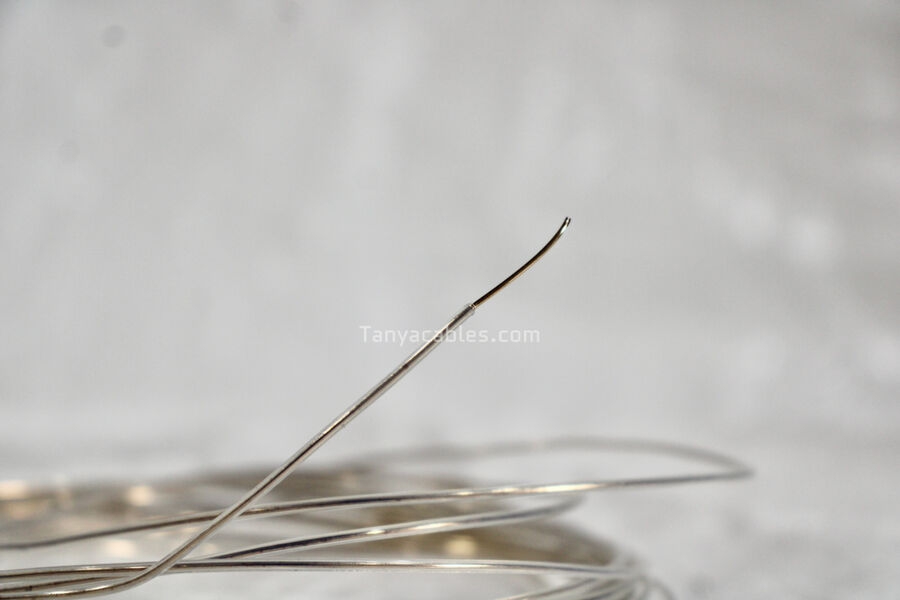
What is ETFE?
ETFE stands for Ethylene Tetrafluoroethylene, a fluoropolymer in the same family as FEP and PTFE but built for a different priority: mechanical toughness. Where FEP and PTFE are chosen mainly for heat and chemical resistance, ETFE adds meaningfully higher tensile strength, cut-through resistance and abrasion resistance, in a lighter and thinner-wall construction. Our ETFE insulated wires are built on exactly this profile for applications where the wire itself takes a physical beating.
Key properties of ETFE insulated wire
- High tensile strength and cut-through resistance that stands up to rough handling and repeated flexing
- Lightweight construction that helps cut overall system weight - a real advantage in EVs and aircraft
- Thin insulation walls that let more wires fit into the same space without heat build-up
- Wide operating temperature range, from cold storage to high-heat industrial areas
- Strong resistance to fuels, oils, solvents and most industrial chemicals
- Good UV and weathering resistance for outdoor and exposed wiring runs
- Holds up well under continuous vibration without insulation fatigue or cracking
Where ETFE insulated wire is used
- Automotive and EV wiring harnesses - where flex life and weight both matter, alongside our automotive harness cables
- Aerospace and defence wiring - demanding weight, vibration and reliability requirements together
- Oil and gas field instrumentation - rugged handling and chemical exposure in the field
- Medical device cabling - compact, reliable wiring that tolerates repeated flexing
- Industrial robotics and moving-cable applications - continuous flex cycles without fatigue failure
- Rail and mass transit systems - long service life under constant vibration
Fire safety and radiation resistance
Beyond mechanical toughness, ETFE has another property that matters a lot in enclosed spaces: it produces very low smoke and low toxic gas emission if it does burn, and it's inherently flame-retardant. That's a major reason it shows up in aircraft cabin wiring, rail rolling stock and mass-transit systems, where fire codes place strict limits on smoke density and toxicity in an enclosed passenger space. ETFE also holds up well under gamma and other forms of radiation exposure, which is part of why it's specified in nuclear facility instrumentation and certain aerospace applications where standard insulations would degrade over time.
ETFE vs FEP vs PTFE
If the deciding factor is cost and manufacturing precision for general industrial use, FEP is usually the better fit - see our FEP insulated wires. If the application needs the highest possible continuous temperature or the most aggressive chemical resistance, PTFE takes over, as covered in our extruded Teflon wires. ETFE sits alongside both as the choice when mechanical toughness, flex life and weight matter as much as, or more than, raw temperature resistance. For the full comparison of FEP, PFA and PTFE, see our guide on choosing the right fluoropolymer wire insulation.
Why choose Tanya Enterprises ETFE wires
Every ETFE wire we manufacture passes through strict quality checks using premium raw materials, and is certified under RoHS, REACH, HAR, CE, AD8 and Halogen-Free standards. We customise conductor size, insulation thickness, wire length and colour coding to your specification rather than limiting you to a fixed catalogue range.
Frequently Asked Questions
Is ETFE stronger than PTFE?
ETFE has notably higher tensile strength, cut-through resistance and abrasion resistance than PTFE, along with a lighter weight, which is why it's chosen for wiring that flexes, vibrates or gets handled repeatedly. PTFE still holds the edge on maximum continuous temperature and chemical resistance.
Can ETFE insulated wire be used outdoors?
Yes. ETFE has good UV and weathering resistance in addition to its chemical resistance, making it a suitable choice for outdoor and exposed wiring runs alongside its use in automotive, aerospace and industrial settings.
What is the difference between ETFE and FEP insulation?
FEP offers a better balance of cost and manufacturing precision for general industrial use, while ETFE trades some of that cost advantage for meaningfully higher mechanical toughness, cut-through resistance and a lighter, thinner-wall construction - useful where wire weight and flex life matter more than raw cost.