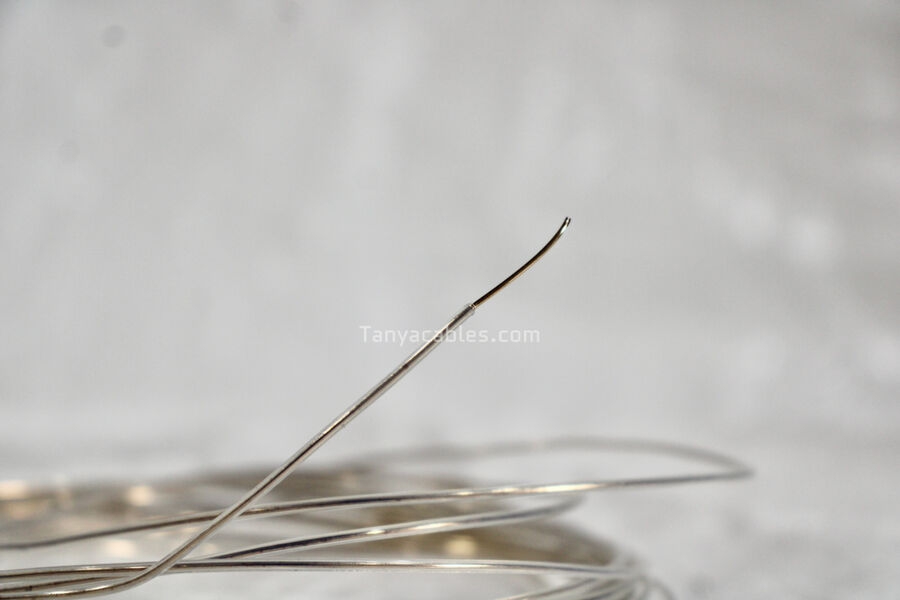
Most people searching for ETFE insulated wires manufacturers are not looking for a definition. They are engineers, harness builders or purchase teams who already know their wire has to cope with flexing, vibration or rough handling, and now need a dependable source. The points below are meant to help you compare suppliers on things that actually affect your project.
First, confirm ETFE is the right material
ETFE is a fluoropolymer chosen mainly for mechanical toughness. It is lighter than most alternatives and allows thin insulation walls, which helps when space and weight are limited. Our ETFE insulated wires are built around this profile.
It is not always the answer, though. The table below gives a quick comparison with the other insulations people usually shortlist.
| Insulation | Usually chosen when |
|---|
| ETFE | The wire flexes, vibrates or is handled often, and weight or wall thickness matters |
| FEP | General industrial use where cost and manufacturing precision matter most; see FEP wires |
| PFA | The job calls for a PFA construction; see PFA insulated wires |
| PTFE | The highest continuous temperature or the most aggressive chemical exposure; see extruded Teflon wires |
If you are still undecided between these, our guide to choosing the right fluoropolymer wire insulation goes through the trade-offs in more detail.
What to check when comparing manufacturers
- Raw material quality. Ask what grade of material is used and whether the supplier controls quality checks in-house.
- Certificates you can verify. If your project needs RoHS, REACH, CE, HAR, AD8 or Halogen-Free compliance, ask for the certificates instead of relying on a claim on a website. Our ETFE wires are certified under these standards.
- Customisation range. A fixed catalogue is fine for common sizes, but many projects need a specific conductor size, insulation thickness, colour code or cut length. Ask whether these can be changed without a major compromise.
- Consistency between batches. A wire that matches your sample but varies from lot to lot causes problems at the harness stage. Ask how batches are checked.
- Willingness to discuss the application. A good supplier asks where the wire will be used. If nobody asks, nobody is checking whether the construction suits it.
- Clear communication. Quick, specific replies during the enquiry stage usually reflect how the supplier will behave during production.
What to share when you ask for a quote
Incomplete enquiries lead to slow, back-and-forth quotes. Having these details ready usually speeds things up:
- Conductor size and type
- Insulation thickness you need
- Colour or colour-coding scheme
- Required length and total quantity
- Where the wire will be used and what it will be exposed to, such as vibration, fuels, oils or outdoor conditions
- Any standards or certifications your project requires
If you do not have every detail, share what you know and the application. A manufacturer with real experience can usually suggest a suitable construction from there.
Where ETFE wire is typically put to work
ETFE is often a good match for moving or vibrating assemblies, which is why it appears in automotive harness cables, aerospace wiring, robotics, medical device cabling and rail systems. Sensing and heating applications are different. For temperature measurement, you may want purpose-built options such as FEP thermocouple extension cable or FEP RTD cables instead. A manufacturer that offers both insulation families can point you to the right one rather than push whichever it happens to stock.
About Tanya Enterprises
We are a wire manufacturer based at Vedvyaspuri Industrial Area, Meerut, Uttar Pradesh. Every ETFE wire we make goes through quality checks using premium raw materials, and we customise conductor size, insulation thickness, wire length and colour coding to the specification you give us. If you would like to see the full range, browse our electrical cables page or send us your requirement through the form below.
Frequently Asked Questions
What should I send to an ETFE wire manufacturer to get an accurate quote?
Share the conductor size, insulation thickness, colour, required length, quantity and the application the wire will be used in. Mention any standards or certifications your project needs. The more complete the specification, the fewer revisions the quote will need.
Can ETFE wire be made to a custom length and colour?
At Tanya Enterprises, conductor size, insulation thickness, wire length and colour coding can all be customised to your specification instead of being limited to a fixed catalogue range.
Should I choose ETFE or FEP wires for a wiring harness?
If the harness will flex, vibrate or be handled often, or if weight and space are tight, ETFE is usually worth considering. If the priority is a balance of cost and manufacturing precision for general industrial use, FEP wires are often the more practical choice. Your operating conditions should decide it.
Final thought
Choosing a manufacturer is mostly about fit: the right material, the right specification and a supplier who engages with your application. Compare on those points, ask for documents, and start with a clear enquiry. That usually saves more time than comparing prices alone.